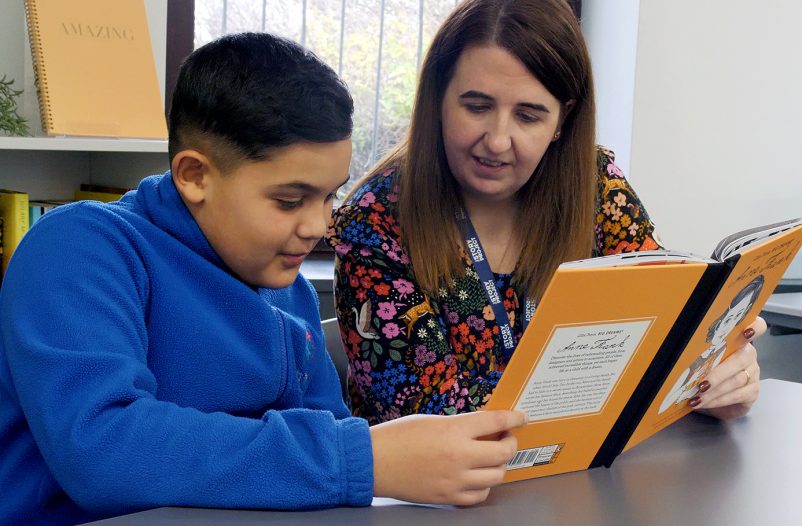
Children using The Story Project make gains in wellbeing, emotional literacy, empathy and reading skills
Second annual independent evaluation into Bradford schools project published
Impact, News
SHINE exists to tackle the barriers that hold back disadvantaged children and young people.
Children from low-income households have untapped potential, but they face numerous obstacles that hinder their ability to keep up academically with their peers.
This disparity, known as the attainment gap – or disadvantage gap – emerges in the early years and is measurable by age 5. If left unaddressed, it continues to widen throughout a child’s education.
By the time they take their GCSEs and A-levels, this gap often results in many young people underachieving and leaving education without crucial qualifications in English, maths and science, severely restricting their future access to opportunities.
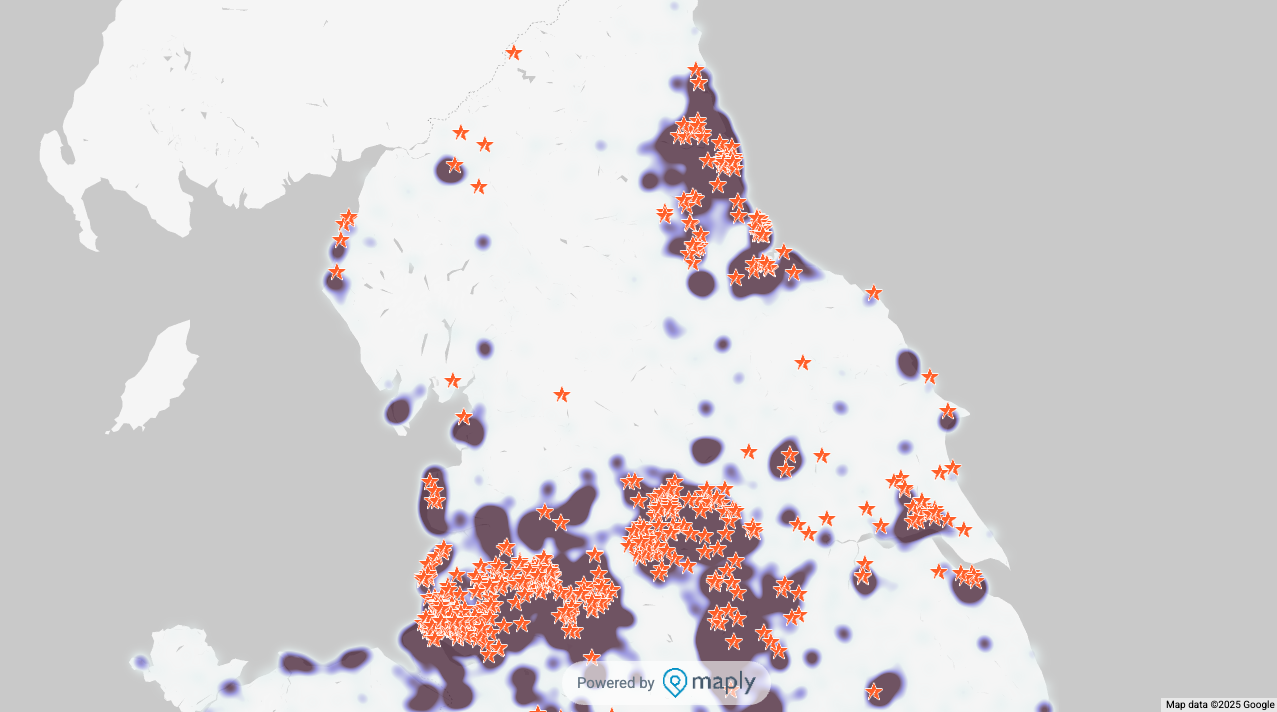
Our work is focused on the areas of the North of England, where need is greatest.
Every child deserves the chance to shape their own future. Yet across the North of England, too many young people are still held back by economic disadvantage that limits their educational opportunities.
At SHINE, we’re determined to change that. Our mission is to remove the barriers that stand in the way of potential and to help every child thrive.
We invest in innovative, evidence-driven projects that tackle the real challenges some children face, both inside and outside the classroom. By supporting new ideas that work, we’re helping to close the disadvantage gap and open up brighter futures.
Together with teachers, schools, and families, we’re building a fairer education system – one where every child has the opportunity to succeed, no matter where they start in life.
Only 62% of disadvantaged children aged 6-11 meet the expected standard for reading, compared to 80% of their better-off peers.
Are You Really Reading? (AYRR) is a highly cost-effective programme that uses 5 innovative techniques, incorporating hashtags and emojis, to help children truly understand what they are reading.
The project has grown fast and is already improving the reading skills of thousands of children across the North West. It is also helping teachers rediscover a love of teaching reading.
An independent study funded by SHINE this year showed consistent directional improved in children’s attainment. The longer pupils took part in the programme, the better they performed.
The study followed 1,588 pupils from 38 schools, grouped by how long they took part in the programme. Evaluators stated: “These findings confirm consistent, directional improvement in student attainment.”
AYRR is now being used in 156 primary schools and 13 secondaries across the North West, with a focus on Bolton, Liverpool, Knowsley, Sefton and West Lancashire. So far, more than 46,100 children have benefitted from the programme, and 2,164 staff have been trained to use it.
Looking ahead, future plans include developing an AYRR website, partnering with a university to advance research on the programme’s impact, and expanding the reach of the programme beyond the North West region.
Click here to read more.
Reading fluency is more than just a skill – it is the gateway to accessing the curriculum, building confidence, and thriving in school. Yet too many pupils, especially from disadvantaged backgrounds, enter secondary school still decoding words rather than understanding them.
The SHINE-funded Fluency For All (FFA) project, developed by Louise Quinn and the North East Learning Trust, is an evidence-based peer tutoring programme designed to build reading confidence and fluency. Children read aloud for 20 minutes, twice a week, supported by trained tutors – older students who receive tailored instruction to guide their peers.
Participants read from bespoke anthologies of non-fiction texts, created specifically for the programme by Louise and her colleagues.
The initiative focuses on pupils who struggle with reading or lack confidence, including many from disadvantaged backgrounds.
In her end-of-year report into the effectiveness of FFA, Louise states: “The intervention group consistently outperformed the control group” when it came to reading improvements, adding, “This occurred across all subgroups, with the greatest improvements seen in girls (+7.6 SAS) and Pupil Premium pupils (+8.5 SAS).”
The improvements for pupils using FFA were described as “highly statistically significant – not due to chance and therefore likely to be as an outcome of the FFA intervention”.
The programme’s impact on disadvantaged pupils is particularly encouraging. Initial assessments showed that Pupil Premium pupils had less access to books at home and engaged in less reading overall. Yet with targeted practice through the FFA programme, these same pupils made the largest strides.
Click here to read more.
An independent evaluation has found that Chatta significantly enhances pupils’ communication and literacy skills, particularly their confidence in speaking and self-expression.
Data also suggests the programme has a particularly positive impact on the literacy skills of children eligible for free school meals and children with special educational needs and disabilities (SEND).
Chatta is an innovative teaching approach that uses interactive audio-visual storyboards to break learning into manageable chunks. It develops vocabulary, oral sentence composition, and communication skills, while boosting writing confidence, fluency, and stamina.
The evaluation of Chatta involved 223 children and 31 teachers from 7 schools participating in a SHINE-funded pilot of the programme.
The evaluation found that “across the dataset, teachers reported significant improvements in pupils’ social and emotional skills, most notably their confidence in speaking and self-expression”.
Click here to read more.
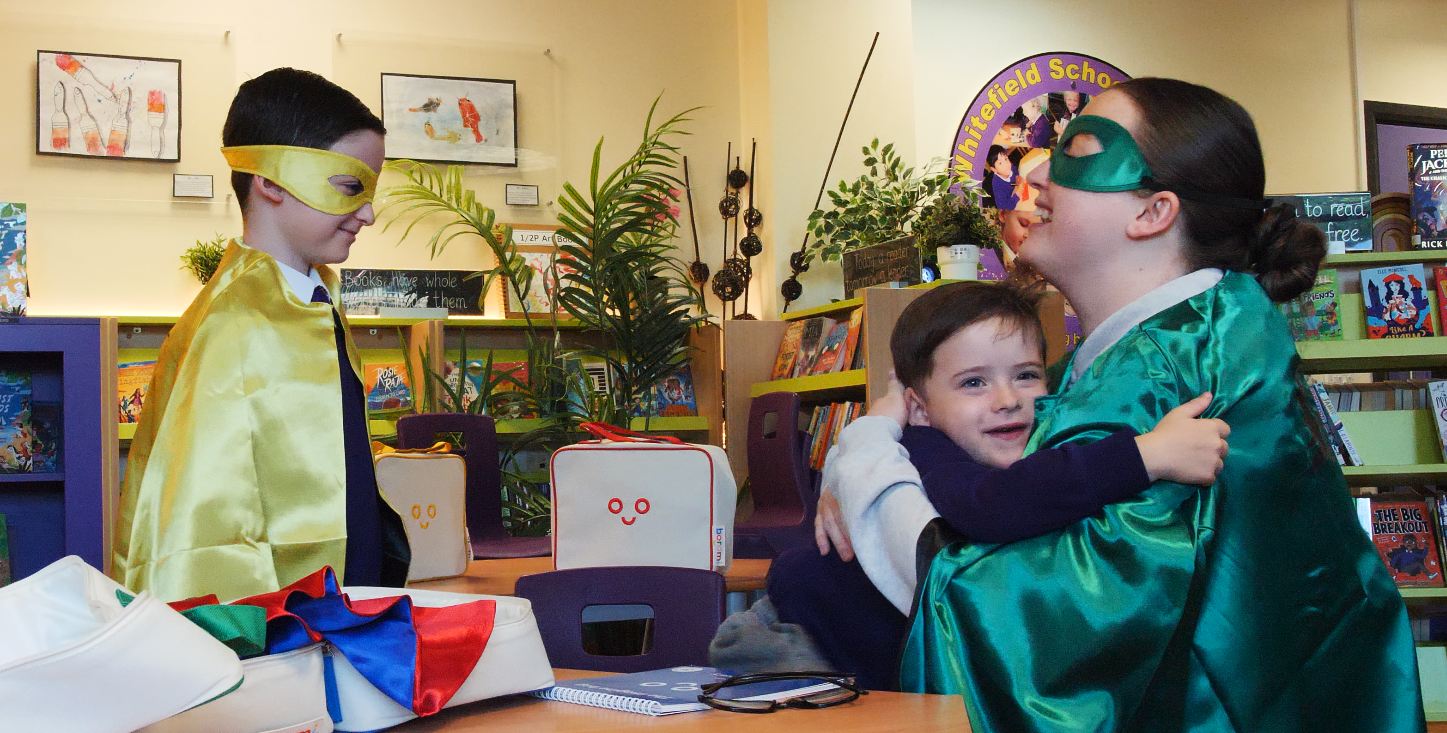
An independent evaluation of The Story Project has found that the programme has a positive impact on pupil wellbeing outcomes across multiple measures. Focus group evidence also indicated that pupils had developed a greater love for reading through the programme.
The groundbreaking literacy and wellbeing programme is being used by primary schools across Bradford.
The 3-year project helps children to develop stronger communication skills and emotional literacy through the power of storytelling. It provides teachers with practical, accessible tools to enhance pupil wellbeing and grow emotional resilience. The initiative has already reached over 16,000 pupils across 25 Bradford schools and aims to expand into 50 schools by the end of summer 2026.
On Bradford teacher said: “It’s not an exaggeration to say that this project has ignited a love of learning and opened doors that some of our pupils never thought possible. We are incredibly grateful for the opportunity and would wholeheartedly recommend this initiative to other schools. The ripple effect of storytelling has been profound – not just on academic performance, but on the confidence, resilience, and aspirations of our students.”
A new approach to teaching maths in the early years “has made a huge difference”, according to teachers, with school inspectors also praising its impact.
Story Time Maths (STM) has been developed by Helen Clarke, Deputy Headteacher at Dane Bank Primary School in Tameside.
At the end of the second year of the SHINE-funded project, it is demonstrating evidence of impact for children, families and practitioners.
Teachers have reported noticeable changes in children’s confidence and reasoning skills.
One Reception teacher reflected: “Teaching maths more ‘in the moment’ and using the learning trajectories has made a huge difference. It feels like I can teach maths as part of my continuous provision, and it is enhancing the children’s attainment in the specific areas.”
Of those taking part in training, 94% reported increased confidence in teaching early mathematics, and 91% had already applied strategies from the training in their classrooms.
Click here to read more.
Jon Blackbourne’s online practical chemistry lessons are proving hugely popular with young people.
His TikTok videos have been viewed more than 6 million times, while he has received more than a quarter of a million views on You Tube.
Regular live TikTok broadcasts are receiving between 2,500 and 5,500 viewers. Jon’s videos are aimed at students who would otherwise not use traditional forms of revision, such as class notes or a revision guide. They are also designed to support disadvantaged students from whom extra, private tuition is unaffordable. “The data I have gathered so far suggests the improved levels of engagement that I set out to achieve are also translating into raised achievement levels,” Jon says.
It is not only students, but also other teachers who benefit. Jon has created 195 YouTube videos covering individual concepts, full topics, and exam questions, all organised into a coherent teaching sequence that functions as a scheme of work. These resources support teachers who may be teaching chemistry outside their specialism – an increasing need given the shortage of science teachers – and provide new teachers with a wider range of classroom activities.
“I see this as an indirect way of reaching out to even more disadvantaged pupils by passing on my 27 years of pedagogical knowledge to the next generation of teachers,” Jon said.
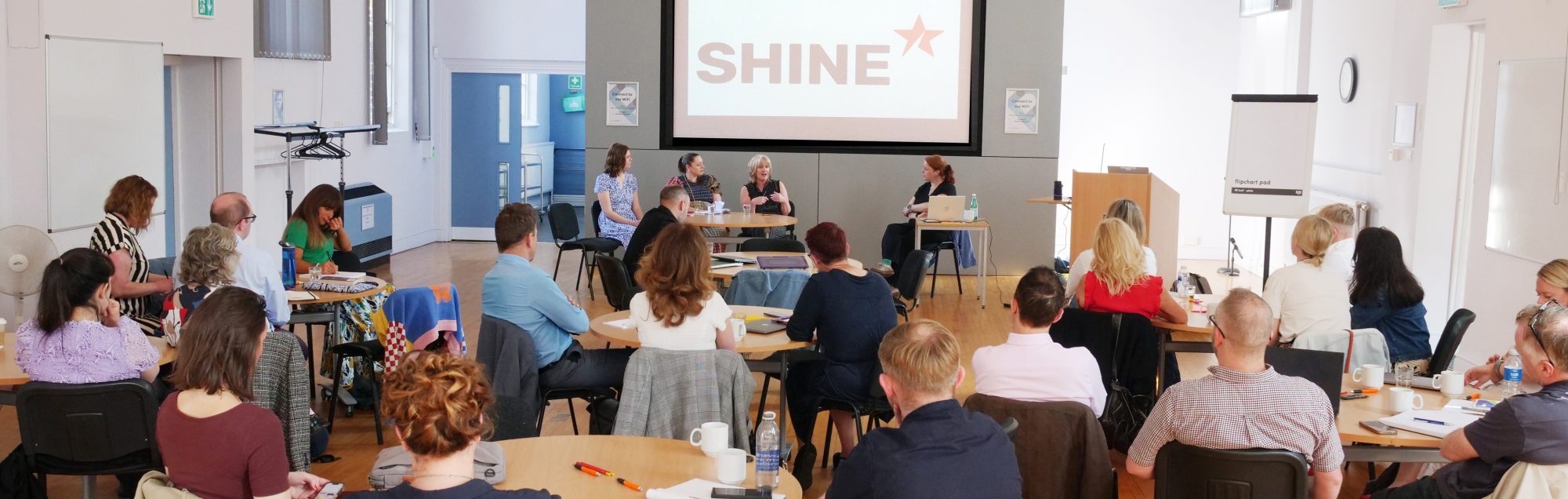
As well as directly funding teachers’ work, SHINE helps forge meaningful connections between them, enabling shared learning and amplifying impact.
Our project leads gain enormous value from being part of wide, supportive networks – sharing good practice, challenges, and insights with others on the same journey.
In addition to the workshops and one-to-one coaching offered to SHINE teachers, this year we launched a peer network for grantees who are looking to grow their projects. These regular meetings provide a trusted space where project leads can connect, discuss challenges, and support one another in overcoming obstacles.
We know that the challenges in education are complex, and no single solution can transform outcomes on its own. But there is enormous power in a community of teachers driving change together.
This year marked a significant milestone for SHINE as we celebrated the 25th anniversary of our first projects; 25 years of supporting teachers, schools, and communities to improve educational outcomes for disadvantaged children. It has been a year of both reflection and renewal, as we build on our strong foundations and look ahead to the future with confidence and purpose.
We are proud this year to launch SHINE Sunderland and Hartlepool Reads, two important new initiatives that demonstrate our continued commitment to tackling educational inequality in the communities where the need is greatest. These programmes embody SHINE’s mission to work collaboratively with local partners to ensure that every child has the chance to fulfil their potential.
It has also been heartening to witness the impressive ongoing impact of our established programmes across the North of England, as highlighted throughout this report. These achievements stand as a testament to the dedication of the teachers we support, the strength of our partnerships, and the generosity of our donors. On behalf of the Board, I extend my sincere thanks to everyone who shares our vision and helps make this work possible.
While there is much to celebrate, we know that significant challenges remain. We remain steadfast in our ambition to remove barriers to learning and unlock the potential of children across the North. Together, we will continue to drive change and build a more equitable future for every child, regardless of background or cicumstance.
Raksha Pattni, Chair, SHINE
Second annual independent evaluation into Bradford schools project published
Impact, News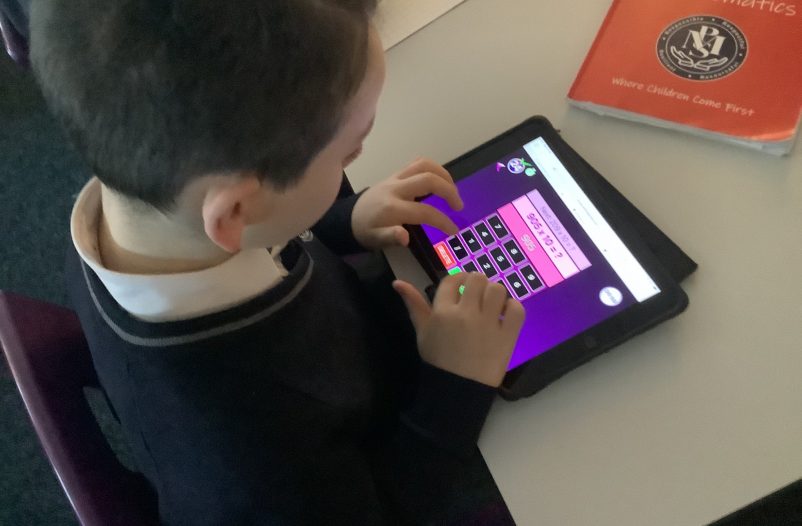
“In the schools where they really found time and prioritised the launch of it… the children absolutely adore it.”
Impact, Let Teachers SHINE, News
“The Story Time Maths approach is giving children a rich understanding of maths and providing them with a solid foundation in the early years” – Ofsted
Impact, News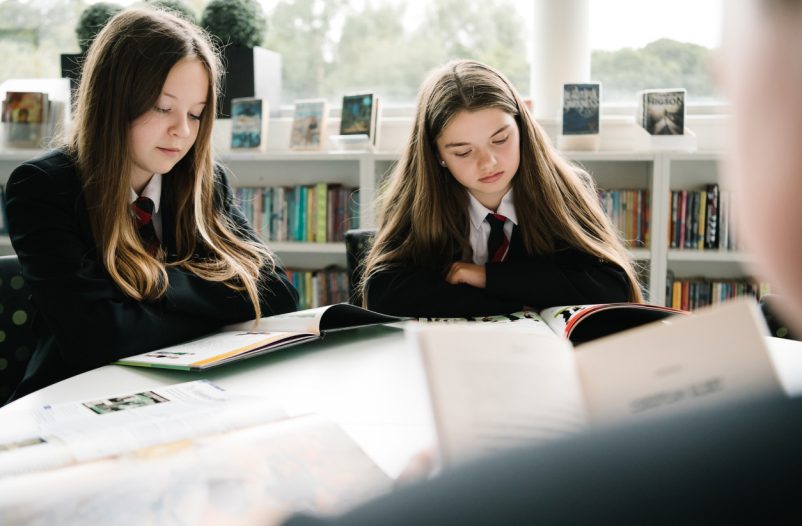
Pupil Premium pupils' reading age scores improved by +8.5 points, compared with +0.9 in the control group
Impact, News