
£350,000 investment to build a blueprint for change in Pennywell
Pennywell Fellowship is a bold, school-led partnership designed to tackle entrenched disadvantage
SHINE Sunderland is investing £351,115 in the Pennywell Fellowship, a bold, school-led partnership designed to tackle entrenched disadvantage through deep collaboration across Pennywell and the wider city.
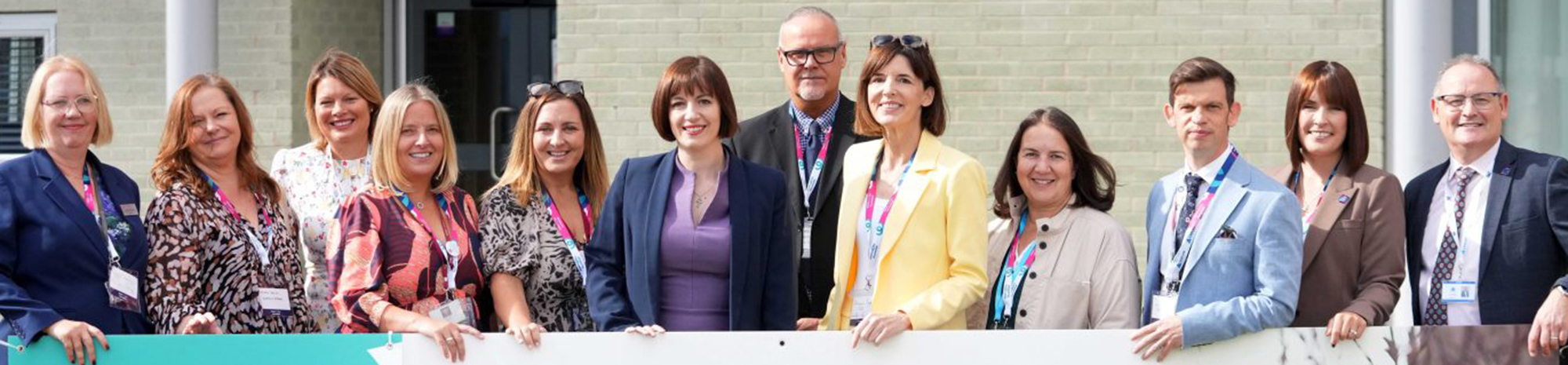
Launched in September 2025 at an event attended by Education Secretary Bridget Phillipson, the fellowship brings together six schools – Academy 360, Christ’s College, South Hylton Primary Academy, Highfield Primary School, St Anne’s Primary Academy and North View Academy.
The schools are united by a shared commitment to break down barriers to opportunity for children and their families, improve attendance as well as a range of other outcomes.
This investment marks the first phase of developing a long-term, scalable blueprint – one that has the potential to be replicated in other wards of Sunderland and beyond.
The aim is to create a new model for civic collaboration, designed to address the challenges facing young people through deep, long-term collaboration.
Pennywell is a community with deep pride and strong identity, but also one that has experienced decades of underinvestment and limited access to opportunity. Over time, trust between institutions and families has also fractured.
Attendance across the fellowship schools stands at 86.6%, with more than 42% of pupils persistently absent. Academic outcomes remain among the lowest nationally, and many families feel disconnected from school and wider civic support.
As project lead Sarah Hammond, School Improvement Partner at the Laidlaw Schools Trust, explains: “We know this could be transformational for our community. But we wouldn’t be able to move ahead and achieve the quality of what we want to achieve without this funding.
“SHINE’s funding will enable us to build something robust, that is sustainable for the long term – not just for Pennywell, but something that could ultimately benefit other communities too.”
The Pennywell Fellowship believes the resources needed to transform outcomes already exist across the city – in employers, universities, public services, charities and cultural organisations – and that by working together, rather than in isolation from one another, we could achieve far greater impact and far more efficiently
Headteachers in Pennywell recognised that schools alone cannot solve deeply rooted disadvantage. Equally, civic partners often want to help but lack coordination, governance and clear entry points into schools.
The fellowship’s approach is to create an “ecosystem”, aligning schools with civic and national anchors, local employers, public services and charities around three shared priorities:
- Enrichment – ensuring every child can access meaningful cultural, creative and outdoor experiences.
- Employment – ensuring pupils and families are prepared to join the future workforce through real-world experiences and career roadshows.
- Engagement – rebuilding trust between schools and families, strengthening attendance and wellbeing and giving a voice to pupils and communities.
“Most civic organisations: the police, public health, children’s services, schools, businesses and the volunteer sector, are working towards the same social value missions and goals,” says Sarah. “The police, public health, children’s services, schools. But we’ve been doing it in silos. It makes sense that we pool, not only financial resources, but also our different expertise, experiences and lens’ on possible solutions.”
This first phase of SHINE funding will focus on developing the Fellowship’s infrastructure and delivery model, laying foundations that can be sustained and scaled.
A dedicated project manager will oversee the strategic plan and chair termly Headteacher Board meetings, supported by working parties across the three priority areas. The partnership will work closely with University of Sunderland to establish baseline measures and robust evaluation, ensuring that impact is tracked and learning is captured.
A digital platform will be developed to connect schools and civic partners more efficiently – removing one of the most significant barriers identified by both sectors.
Crucially, a Community Connector will be appointed to support the implementation and embedding of the blueprint. Together for Children are supporting the fellowship to recruit and train a group of Family Champions – trusted community members who will act as bridges between schools and families.
“We’ve identified key influencers in the community,” says Sarah. “Parents who other parents trust. When someone they recognise and trust says ‘I’ll go with you to that group’ or ‘This support is for you’, that’s powerful. If we can build a strong network of Family Champions, that could be transformative.”
Research shows that early absenteeism can be linked to later anti-social behaviour and poorer life outcomes, so the fellowship aims to find ways to help every child attend early years and Key Stage 1 provisions that provide vital foundations in education and social development.
“The strength of SHINE Sunderland’s 10-year commitment to the city is that it allows us to think long term,” says Sarah. “Most funding cycles are two or three years. You can’t transform a community in that time. With SHINE, we can measure the impact over a decade – especially around attendance and early intervention.”
Each of the fellowship’s priorities will be underpinned by clear success criteria, from attendance improvements and increased parental engagement to measurable access employability opportunities.
What makes the Pennywell Fellowship distinctive is that it is school-led and involves schools from different trusts – a collaboration across six schools that are geographically close that have not always enjoyed close connections.
“It’s quite unusual,” Sarah reflects. “Most place-based work is led by community centres and local authorities. Ours starts with schools – and not just one school, but a collaboration across trusts. That’s powerful.”
SHINE’s investment will enable the development of a step-by-step blueprint for replication in other Sunderland wards, with interest already emerging from regional partners.
It is hoped that the Pennywell community will test and refine a model for how civic ecosystems can work differently, in a more connected way, with schools at the centre but not carrying the burden alone.